Talking Story · November 5, 2026
“History Is Not an Abstraction”
An Interview with Alethea Tyner Paradis, Peace Works Travel’s Founder
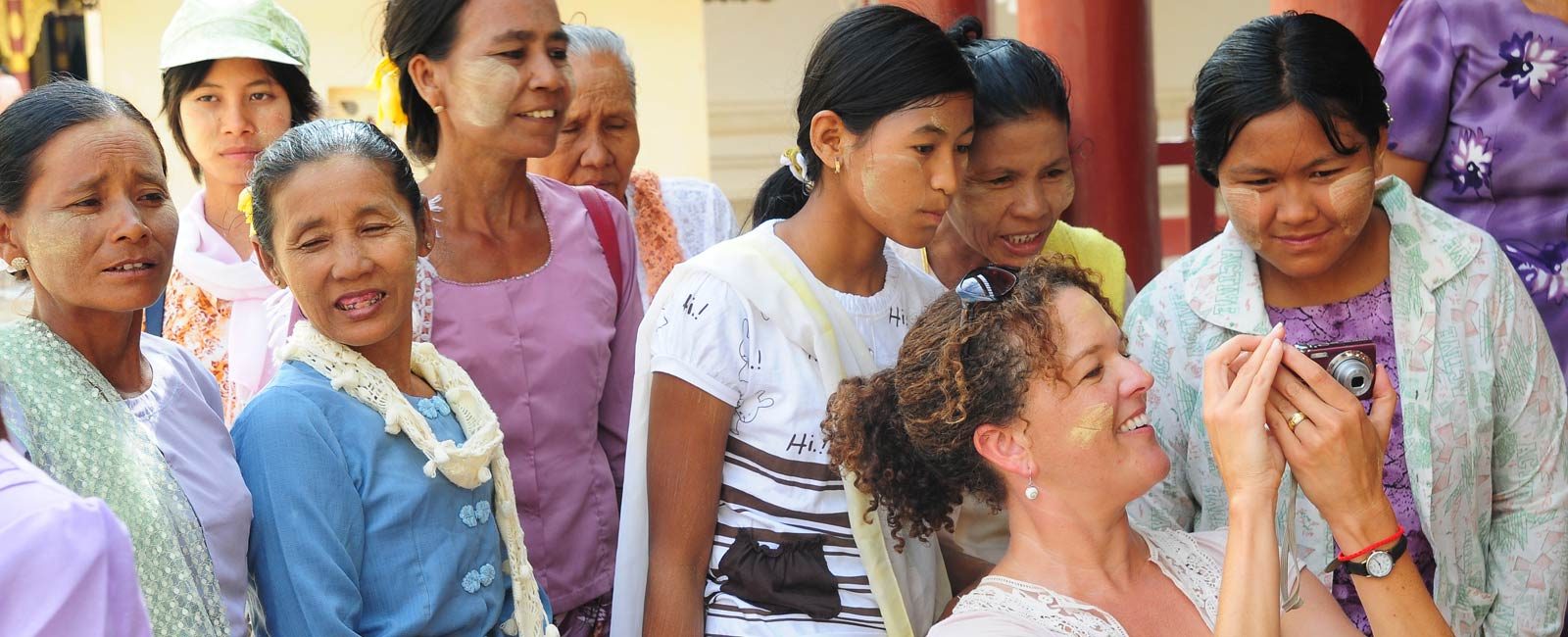
In 2026, AltruVistas and Peace Works Travel merged! Peace Works, which supports high school student travel to international communities that have faced conflict, is now under the stewardship of AltruVistas. We caught up with Alethea Tyner Paradis, Peace Works’ founder, to hear about Peace Works’ origin story, its experiential education model and digital storytelling curriculum, and to hear her thoughts on the merger.
AltruVistas: Hi Alethea! We’d love to hear directly from you about Peace Works’ mission, and learn how the company came into being.
Alethea Tyner Paradis: Peace Works was born out of a desire to create ethically-engaged global citizenship in young people.
Originally, I was educated as a lawyer, and for a time I worked in legal aid, doing public interest law before I became an educator. When 9/11 happened, I was teaching in a private school. On that day, and in the weeks afterward, I heard my students expressing the kind of war jingoism that was circulating at that time, as if it was the answer to our national grief.
Being a history teacher, you see these patterns; you see this groupthink mentality—you see human beings making the same kinds of mistakes over and over and over again. I was emotionally distraught and agitated by that. So, the desire to create an experiential education program that would shake up students’ thinking grew directly in response to that. I wanted to inspire students to see that the history they were learning was not just some abstraction, but an actual documentation of unthinkable horrors that took place in specific localities that were related to colonialism, racism, imperialism, consumerism—the whole tangled web.
And to get a teenager to get their head around that, really, you have to take them to where history happens.
AltruVistas: How did Peace Works’ digital storytelling program come into focus?
Alethea Tyner Paradis: In the mid-aughts, the educational tourism space was becoming very saturated. But what put us on the map was the digital storytelling program. That program emerged out of a trip to Vietnam. At the time, I was reading Girl in the Picture, the book about Kim Phúc, who was known as the Napalm Girl—she was the child in the very famous 1972 Pulitzer Prize- winning photograph.
I’m reading that book as we’re driving through the Vietnamese countryside, and students are in the back of the bus chattering, and we’re on our way to the Cu Chi Tunnels—the underground labyrinth where the North Vietnamese and the resistance had their headquarters. As I’m reading, our dear friend and guide leans over and says, “Oh—we’re right by where that exact bombing happened.”
I was incredulous. “Wait, what? We're here right now? In this exact spot?”
And he says, “Yeah—it’s just down the road.”
So very spontaneously, we pulled over. We were able to talk with Kim Phúc’s family, and they said, “Yes, there’s a movie about her, and we show it.” They showed us where the bombing happened, and where they hid in the temple. They told us the whole story, and the students’ heads were just spinning. As an educator, I recognized that something incredible had just happened.
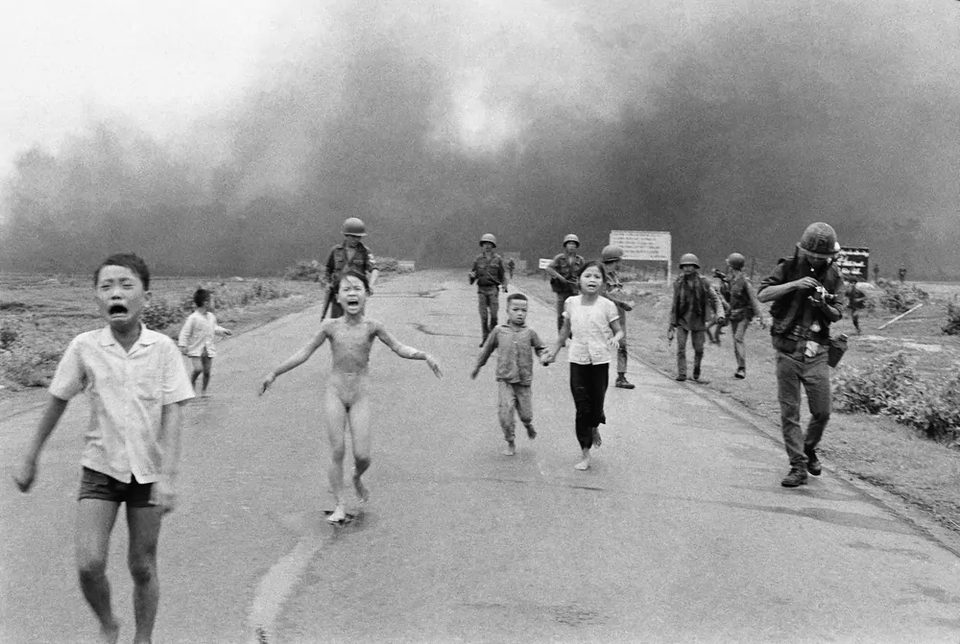
When we got back to California, the students wanted to know where Kim was now. But when she was still young, after she had recovered from her surgeries, she had been exploited the Vietnamese communist media, which had trotted her out as a form of anti-American rhetoric—so she was very media-shy. But my students and I, we made a project out of it—I turned it into learning opportunity for the students: “If you want to be an investigative journalist, this is how you track down people and see if you can reach them.” We wrote and called; wrote and called; and then finally we said, “Okay, well, she doesn’t want to be found.”
Some time later, she ended up calling me. She said, “I’m so sorry it took me a while to get back to you, but I don’t usually trust when people reach out to me. I had to ask my family if they had actually met you, and they said yes, and that you were lovely.” So she and I became kind of correspondents at first.
Eventually she said, “I have a lecture where I talk about my life, and I’m willing to come to Santa Barbara.” And so we—the students and I—raised the money in order to do this. We brought her to the Lobero Theater in Santa Barbara. It completely sold out. People were hawking tickets out front to get in to meet her and see her, because it was the 40-year marker since that photograph was taken.
ABC News got wind that she was going to be here, and since the 40-year anniversary was coming up, they created the documentary “The Power of a Picture (opens in a new tab).” I had another group going to Vietnam that spring, and they came along with us, and shadowed and featured us. We were traveling with Nick Ut and Christopher Wain: Nick took the photograph, and Chris was the journalist who took the video footage of the bombing.
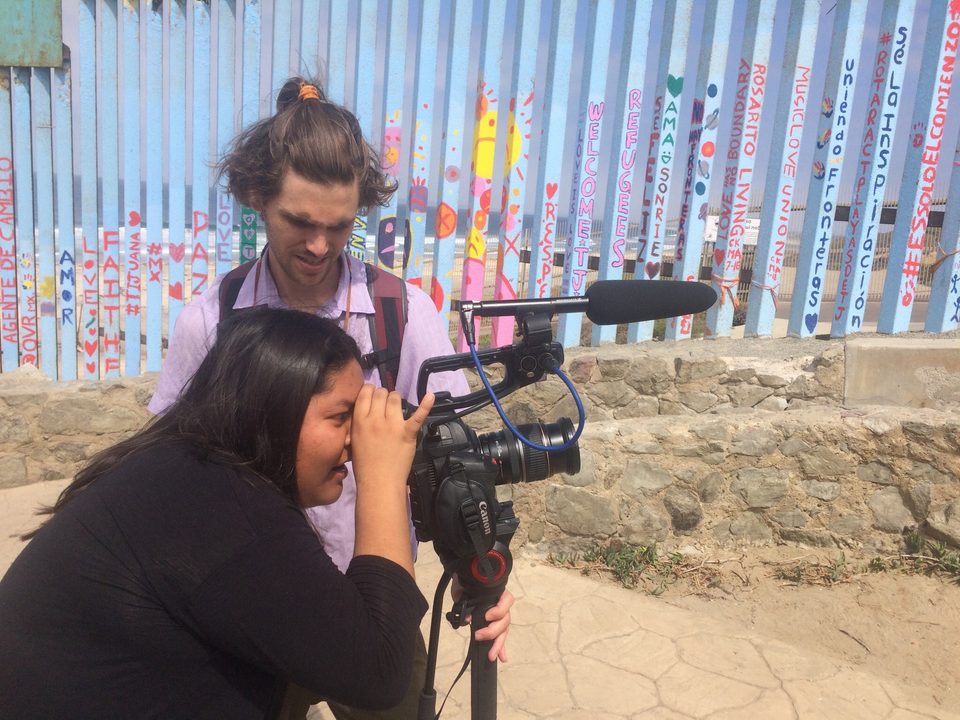
That whole unfolding with Kim is what put Peace Works on the map, and distinguished our digital storytelling program. We weren’t just another travel program: We worked with journalists, and we had a methodology for how move students from simply asking questions and being curious to experientially bringing them to places recovering from conflict. We developed curriculum to instruct them in the art of amplifying local voices, and in creating narratives that would humanize the history of what happened.
We also are really conscious about ethical storytelling intentions: “Don’t come in here and extract from these people so that you can be featured in film festivals; don’t do this for your credentials for getting into college, etc.”
Editor’s note: See the Peace Works ethical investigative journalism archives (opens in a new tab) for student-produced films in Cuba, Vietnam, Cambodia, Laos‚ Guatemala, Rwanda, Washington, DC, and the California-Mexico border.
AltruVistas: What are your thoughts on the AltruVistas/Peace Works merger?
I think the question, “How is what you’re doing different from voluntourism?” is one that Malia [CEO and founder of AltruVistas] and I answer similarly. “How is this not colonial? How is it not, ‘Here come the well-meaning privileged people to Country X?’”
For me, the truth is that I did start out doing voluntourism-type stuff, and the evolution into Peace Works took shape through the history curriculum and the digital storytelling curriculum—which compel a kind of purposeful engagement that’s not grounded in saviorism. It’s grounded in curiosity, and an intentional listening practice, and also an ethical representation practice. Many of our students are quite technically media-savvy already, but what we’re teaching them goes deeper: “How do you do ethnographies? How do you do person-on-the-street interviews? How do you meet with a survivor of something and actually build trust?” Because you’re just parachuting in here, and asking somebody to reveal a really intimate part of themselves—their story, their trauma, their experience of living with history and its consequences. How do you work with that and represent that in a way that is actually going to generate good for that person, rather than give them some negative scrutiny that they don’t need and didn’t ask for?
Today’s students are also being bombarded by media—constantly seeing what’s on their silo-d screens and assuming it’s reality. Their brains and consciousnesses take it in as if it’s unequivocal truth. So I personally believe that travel is more important than ever for this very reason, and I think it’s pretty urgent to get young people to see with their own eyes.
AltruVistas: I really like what you’re saying—you’re basically saying travel is the ultimate information literacy.
Alethea Tyner Paradis: Yes, because it’s embodied. You can’t not know it if you’re there and you see it. Scaffolding that embodied knowledge with curriculum is one of the things I’m very proud of, and what really distinguishes Peace Works.
Malia does a similar type of work with student groups, and also with the adult travelers she works with. What is key and beautiful about the merger between Peace Works and AltruVistas is that AltruVistas does an excellent job of sustaining nonprofit partners in host destinations at a scale that they can depend on annually. Malia is incredibly generous with her model that way, and she does it at a scale that allows local entities and nonprofits to thrive—to keep their autonomy and operate with integrity. It’s not a patronage relationship: it’s an exchange, and I think Malia’s done a really excellent job with that.
What Peace Works brings to this marriage is the curriculum, and the intentionality behind educating student travelers pre-departure, during departure, and post-departure. The digital storytelling program is one way this happens, but also‚ in the other immersion experiences where the students aren’t making films necessarily, they’re still immersed in daily activities, rituals, and mindfulness to cultivate a lifelong shift in awareness about one’s own self relative to people living in less privileged countries.
AltruVistas: How did you and Malia originally cross paths?
Alethea Tyner Paradis: The ethical travel sector is relatively small. We met in the mid-2010s. I had been doing some work with Rethinking Schools, and the Howard Zinn Education Project, and I was talking with Bill Bigelow of Rethinking Schools magazine, who also wrote The Line Between Us: Teaching About the Border and Mexican Immigration (opens in a new tab)—a book I had been teaching from. I asked him, “Have you ever considered taking a group of students down to the border—or taking teachers even, if you're not ready to take students?” And he said, “Yes, I’ve done this once before, and here’s the entity I worked with.” That organization was Global Exchange, where Malia ran the Reality Tours program prior to founding AltruVistas.
So Bill put me in contact with Malia. She was now AltruVistas, and when I looked at her website I said, “Oh, you go to Cuba!” It was perfect, because Peace Works was also operating in Cuba, but I needed a new partner that was more ethically aligned. So Malia and I met because I was inquiring about the border, but at that time, she wasn’t specifically doing border trips—the trip with Bill had been a one-off. But she and I started working together in Cuba.
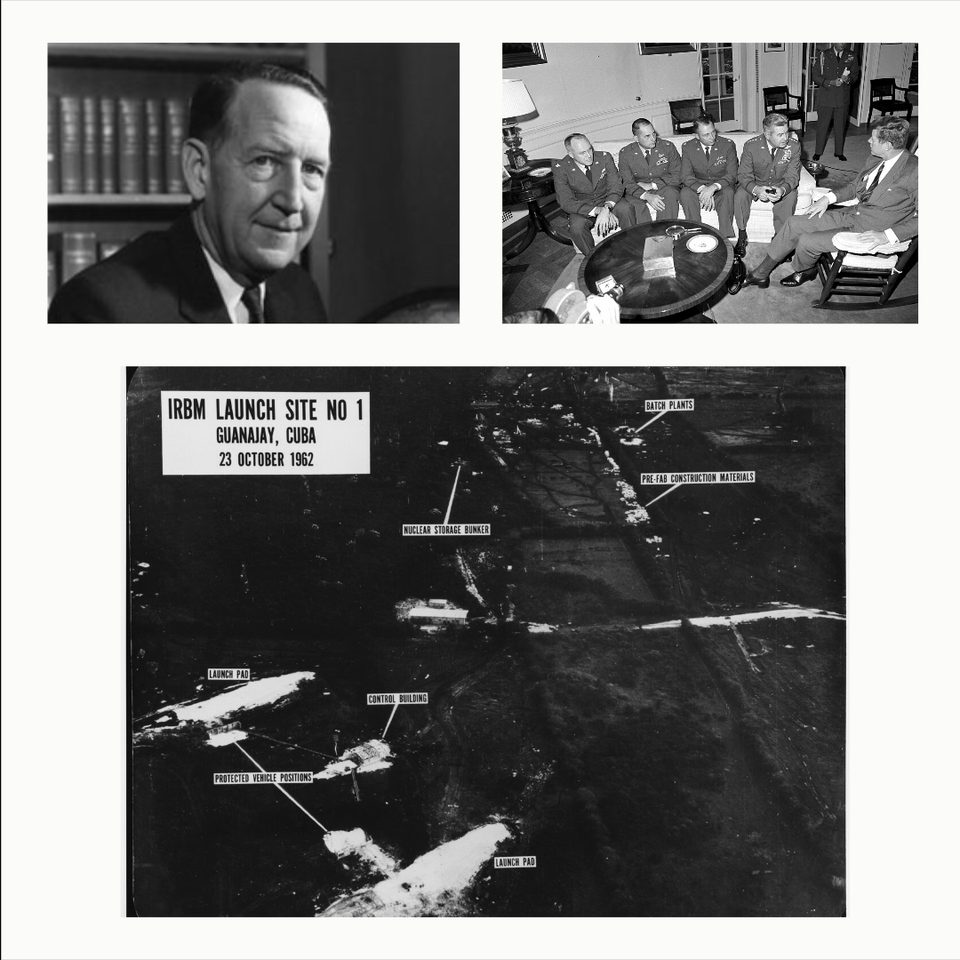
I have a Cuba history curriculum; I’ve taught a whole class on it. A key part of why Cuba is so particularly important is because the one aspect of the Cuban Missile Crisis is an example of study abroad literally saving the world.
Kennedy was surrounded by all these warhawks who insisted that things in Cuba were dire, and that we had to pull the trigger on the nukes—that we had to escalate our violence against Cuba. Eisenhower had been very involved in covert operations against Cuba. But Kennedy’s a newbie, he’s young, and even though he’s a veteran he’s this kind of East Coast intellectual, not pro-violence in the way some of these generals were. So there’s this intense pressure to be the military aggressor to get the Russian missiles out of Cuba. It’s an intense time period: McCarthyism and freakouts about communism, and there’s this weird little fever dream that a nuclear war is maybe winnable, which is insane. Definitely not winnable.
Kennedy already had egg on his face because of the failed Bay of Pigs invasion—even though it wasn’t his; he inherited that from Eisenhower—but he’d gone ahead with it, but it was a total failure. So, he’s got all of these warhawks squawking in his ear: “You need to escalate; you need to pull the trigger.”
Well, there was one guy in his advisor group, Llewellyn Thompson, who had studied abroad in Russia and had even lived with Khrushchev. Thompson knew enough from that cross-cultural experience to think more compassionately about the enemy and to think more expansively about this particular conflict. He could imagine the so-called enemy—these adversaries that would be so easy to wipe off the face of the earth with the push of a button—as individuals; as humans; as people who loved their children. And so Llewellyn Thompson was able to interrupt the momentum towards violence. At that time, the momentum towards wide-scale nuclear war violence was happening through telegrams—and the interpretation of telegrams, and how to react to telegrams. Just like how now, we’re reacting to text messages; we’re reacting to social media; to news. Bits and bytes of information that are really easy to get yourself all agitated about.
Well, what the man who studied with the enemy was able to artfully suggest is maybe the words don’t mean what you think they mean. Maybe you should respond to this first telegram that’s more conciliatory, rather than the second one, and see if we can find a pathway towards de-escalation rather than escalation. And that’s a kind of long walk around to my point, which is that his experience of being abroad fostered in him an awareness of a different cultural approach that arguably saved us from nuclear Armageddon.
AltruVistas: Alethea, thanks so much for sharing your perspective with us! Anything else you’d like to convey to our readers about your experiences facilitating experiential student travel?
Alethea Tyner Paradis: My life’s purpose is to be an educator. For me, a big part of that is connecting young people to the “far,” “remote,” “foreign,” and “exotic”—I’m intentionally putting those words in quotations. By doing that, I’m really teaching students about the ways in which their own lives are connected to people in far-flung places.
We often start by examining all the privileges we have around us: Where are all these things that we enjoy made? Where’s the waste from them deposited? Where are the people whose hands touch the stuff that we depend upon, and whose hands are picking our food?
Merging Peace Works with AltruVistas only amplifies the work we’re doing, and allows it to operate at a larger scale.
Editor’s note: Alethea is staying on with AltruVistas as the Peace Works Founder and Consultant. Stay tuned for our upcoming Part II Talking Story feature about Peace Works’ US/Mexico border travel program. To learn more about Peace Works Travel, click here.