
Talking Story · November 6, 2026
"How Do You Broaden a Movement?"
A Conversation with Dr. Rosemari Mealy, J.D., PhD, Lifelong Activist and Friend of Cuba
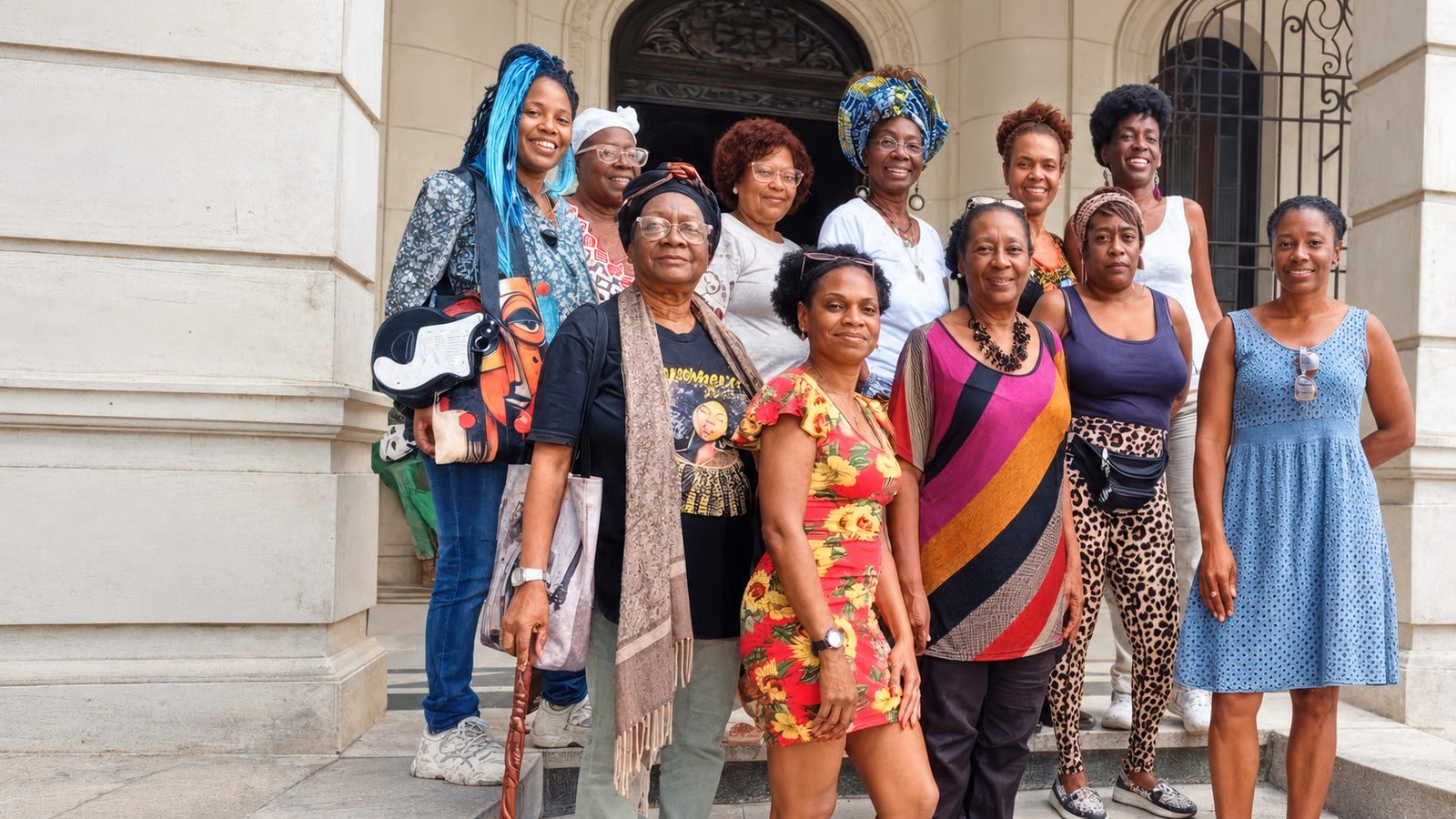
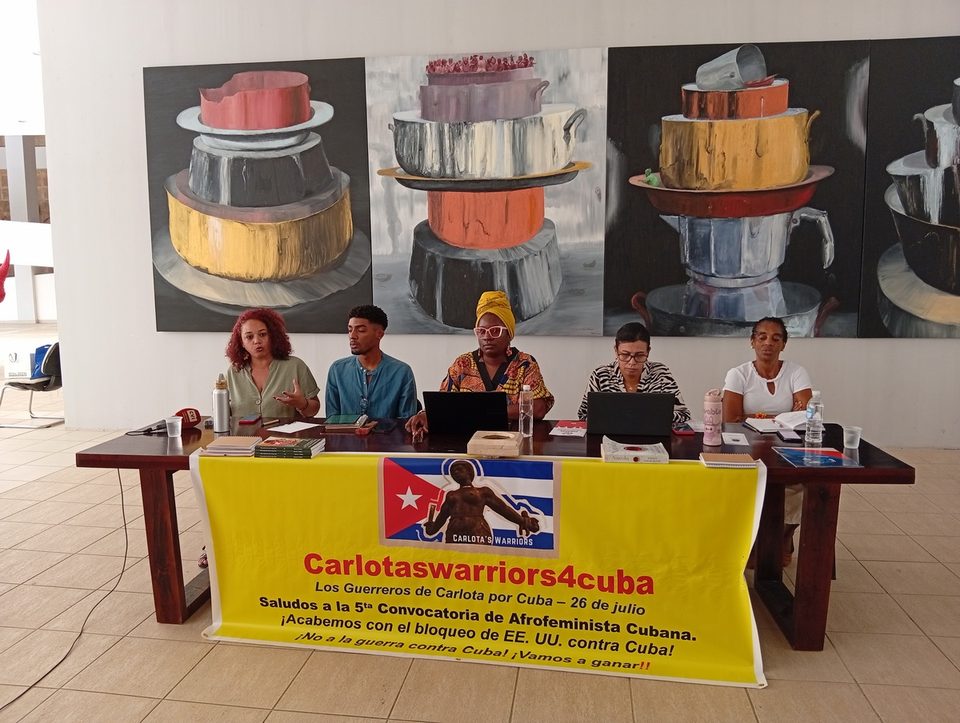
Dr. Rosemari Mealy, who facilitated July 2026’s Carlota’s Warriors for Cuba: Cuban Afrofeminist Colloquium (opens in a new tab) AltruVistas journey, is an activist, educator, and author whose career spans higher education, journalism, and international human rights.
Rosemari has organized and taken part in a multitude of people-to-people delegations to the island, and in the 1980s, lived there while working as an internationalist-journalist for Radio Havana. Rosemari recently received the Cuban Institute of Friendship with the Peoples (ICAP) 65th Anniversary Medal, and in 2013, was honored with the Friendship Medal from the Council of State of the Republic of Cuba in recognition of her solidarity and contribution “to peace and the progress of humankind.”
We sat down with Rosemari to hear her perspective on current U.S./Cuba relations, and to learn more about how her lifelong commitment to Cuba came to be.
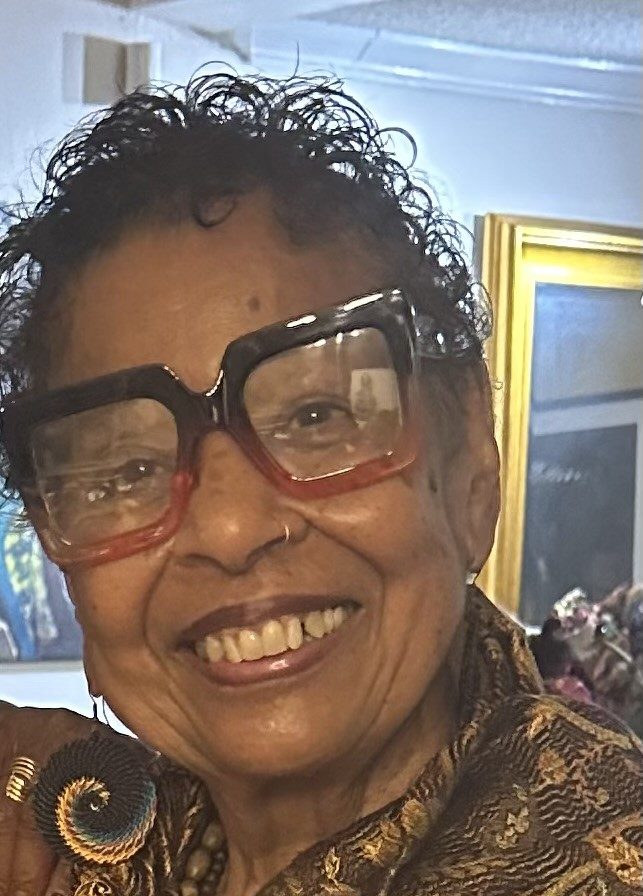
AltruVistas: Hi Rosemari! You have such an impressive bio and a multifaceted background. Can you give us a brief outline of the trajectory of your work?
Rosemari Mealy: Growing up in the South shaped who I am: someone deeply opposed to racism and keenly aware of how it operates in this country and around the world. Like many of my generation, my political path first led me into the Civil Rights Movement, and later, in the 1970s, into the Black Liberation Movement. Over the years, through my involvement in various organizations, I engaged in both theoretical study and hands-on practice. Working in collectives helped ground my thinking and organizing experience, ultimately deepening my lifelong commitment to revolutionary change in this country.
AltruVistas: How did your activist work lead you to Cuba?
Rosemari Mealy: In the 1960s and ’70s, many of the political organizations I worked with understood and supported the Cuban Revolution. Across our communities, people were discussing how central Cuba was to the struggles we were engaged in then—and remain engaged in today. The 1960 meeting between Commander Fidel Castro and Brother Malcolm X also had a lasting impact. If you were young and involved in movements for social change, it was natural to want to learn more about Cuba and find a way to visit.
For example, between 1961-74 some activist members and leadership of the Black Liberation movement, including Robert Williams and members of the Black Panther Party who were harassed, illegally prosecuted, or feared for their life—fled to Cuba, where they were granted political exile.
My first trip to Cuba was with the Venceremos Brigade (opens in a new tab), an organization founded in 1969 by young people connected to Students for a Democratic Society (SDS) (opens in a new tab) and the Student Nonviolent Coordinating Committee (SNCC) (opens in a new tab). The Brigade was created as a way to demonstrate solidarity with the Cuban People and to learn first-hand about the Cuban Revolution. I joined the fifth contingent in 1972, traveling through Mexico City with more than 150 others because that was the only route available for us to travel to Cuba.
My brigade did construction work alongside Cuban workers and students; we contributed to building a new town called Los Naranjos. We also got the opportunity to travel across the entire country, where we saw the remnants of pre-1959 Cuba now contrasted against the new homes rising beside bohios; people in micro-brigades were helping construct houses they would eventually live in. For many of us active in U.S. movements, it was profoundly moving to see socialism in practice.
The U.S. government has repeatedly tried to criminalize the Venceramos Brigade, even falsely claiming it existed to train people in guerrilla warfare. There have been Congressional hearings, arrests, and FBI agents embedded in brigades—including mine. And yet, nearly 60 years later, the brigade continues. That persistence is the point.
That first experience with the Venceremos Brigade instilled in me the importance of being part of an organization that concretely supported facilitating the travel of U.S. citizens to Cuba, so that they could see for themselves what the Cuban Revolution was all about, and how the anti-Cuba propaganda in the U.S. could be challenged. When you travel with the Brigade, you have the experience of working side by side with the Cuban people. You start to see how a society that, despite 65 years now of a blockade, has been able to survive, and the planning and organizing that entails.
After the Brigade, I worked with several other Cuba-related travel agencies in organizing delegations to Cuba. I’ve since partnered with AltruVistas to organize multiple IFCO-Pastors for Peace delegations. The past two years I’ve been independently leading delegations that focus on the work of the Cuban Afrofeministas, where travelers participate in their Colloquiums. With this focus, the goal has been to reach out to a broader community that normally would not be engaged directly in Cuba solidarity work, but to individuals and organizations who are interested in traveling to Cuba and taking material aid as a solidarity gestures. This approach has contributed to broadening the Cuba Solidarity movement, which historically has been white-centered.
So how do you broaden a movement? You start by identifying the issues, concerns, and struggles already present in your community, and compare them with what Cuba has achieved in those same areas despite the decades-long blockade. Cuba has moved toward providing services that people in this country, under capitalism, are still fighting for. On Cuban Afrofeministas delegations, participants see firsthand how Cubans—and especially Cuban women and organizations—are confronting racism in deep and meaningful ways. That lived experience stands in sharp contrast to the anti-Cuba propaganda that dominates U.S. media narratives, including false claims that Cuba is racist or has done nothing for Black or African-descendant Cubans since the Revolution.
The same is true of Cuba’s internationalism. The U.S. government has tried to redefine six decades of Cuban support for African struggles against colonialism and apartheid as a “subversive campaign” driven by “hatred of the United States.” But another way to understand that history is through examples like the Battle of Cuito Cuanavale (opens in a new tab) in Angola—a turning point in the fight to end apartheid that owed much to Cuban internationalists who volunteered to fight alongside their African counterparts.
AltruVistas: You mentioned your involvement with IFCO Pastors for Peace. What can you tell us about that organization?
The Interreligious Foundation for Community Organization (IFCO), founded in 1967 by Reverend Lucius Walker, grew out of the Black Reparations Movement at the time when tensions were high between Black communities and U.S. religious institutions. IFCO is one of the oldest organizations led by people of color in the United States.
The Black Manifesto (opens in a new tab) was a pivotal document authored by civil rights activist and former SNCC member James Forman that called for $500 million in compensation for the role white religious institutions played in the enslavement of Black people and the crimes committed against them. It also proposed funding independent, Black-led institutions and community projects. IFCO emerged as one of those efforts, and used funds distributed by a denomination to support community groups working on social change initiatives—housing, prison reform, education, and other community-based programs.
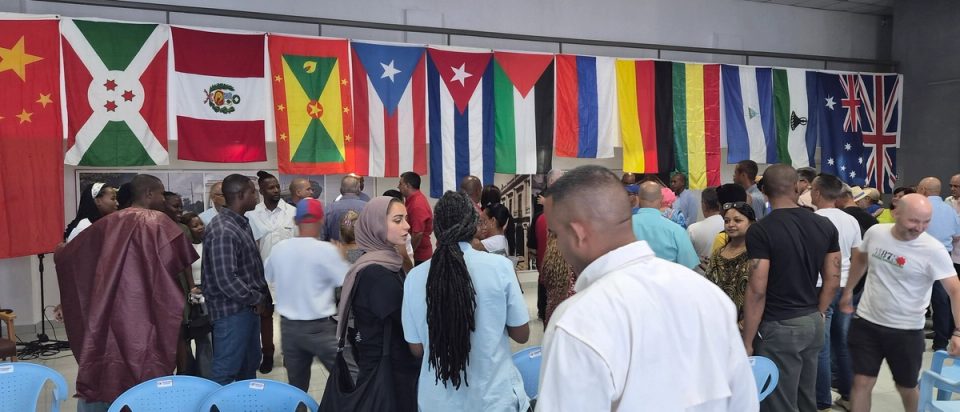
In the ’80s, IFCO also began doing international solidarity work in El Salvador and Nicaragua alongside other organizations like Witness for Peace (opens in a new tab). Rev. Lucius Walker and his daughter Gail were actually shot and injured by the Contras in Nicaragua while they were on a mission. Fortunately, no one was killed. After that, Lucius responded to the suggestion to do the same kind of solidarity initiative in Cuba. IFCO challenged the US travel ban and the blockade by taking material aid to Cuba. They did it without asking the U.S. OFAC (opens in a new tab) for a license. They went to Mexico, and then by boat to Havana, carrying computers, medical supplies, and other material aid in school buses. Once, Pastors for Peace (P4P) did a hunger strike at the border, with support from both activists and elected officials, until the Treasury Department relented and let them in with their supplies. When you travel throughout the island, you might see a little yellow school bus cruising around with “Pastors for Peace” on it. They’re transporting school children, hospital workers, and visitors. If you go online, you can see all kinds of photographs and videos (opens in a new tab) of the little yellow school bus, and how it’s symbolic of the Pastors for Peace component of IFCO. You could compare what they did with the recent efforts to bring the flotillas to Gaza. IFCO deliberately said, “We don’t need a license. You don’t need a license to be human.”
IFCO continues to run constant campaigns to bring material aid into Cuba. Recently, in July 2026, they delivered 60,000 pounds of material aid in a shipping container. (opens in a new tab)
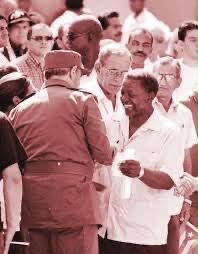
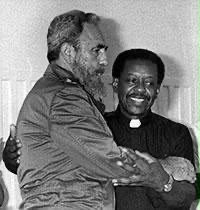
Another important part of IFCO’s history is in 1999, when they organized a delegation of members of the Congressional Black Caucus (opens in a new tab) to go to Cuba and meet with President Castro. Bennie Thompson, the Congressman from Mississippi, was there, and when Fidel asked him about needs in the U.S., Bennie replied that there were incredible disparities in health care access in Mississippi. In response, the Cuban leader said he would open up the Latin American School of Medicine to anyone from the U.S. who would like to come to study there on full scholarship. In 2000, Fidel came to New York and spoke at Riverside Church, and publicly announced that there were 500 scholarships available to any underserved U.S. youth who would like to come to Cuba and study medicine. IFCO stepped in to structure the program. Today, there are over 225 U.S. doctors who have graduated from the ELAM medical school in Cuba—all completely debt free. Many who’ve returned to practice medicine in the U.S. are changemakers in our medical system too, because their training was from within a different, non-capitalist paradigm. The program remains open (opens in a new tab) for those interested in applying.
For a time, I was on IFCO’s medical advisory committee, participating in the interviewing process and the recruitment of these young people. About seven years ago, Lucius passed, and his daughter Gail became the executive director of IFCO. She asked me to serve on their board. And as a board member, you could also lead delegations to Cuba. So that’s how I started traveling in partnership with them.
AltruVistas: You’ve touched on this in a number of ways above, but based on your experiences in Cuba, what are U.S. citizens not hearing in our media that they should know?
The number one falsehood we hear in U.S. media and news is that Cuba is a failed state. But how it be a failed state if, despite 66 years of sanctions and a blockade, you have a robust medical system, and a scientific focus on creating cures for Alzheimer’s? When you’ve developed vaccines for COVID because your country couldn't buy them on the world market due to the Helms-Burton law (opens in a new tab), and then you sold or gave them away to other countries in the Global South? When you have a 98% literacy rate—how did that happen? When your young people are so creative, in dance, art, and sport, and the culture is just so alive and so vibrant? When you see the incredible restoration work on buildings in the section of Havana where UNESCO has been able to help; when young people and architects from all over the world are getting the opportunity to learn from this restoration?
People from other countries travel to Cuba and have a transformative experience when they engage with any of these various sectors, because Cuba remains an experiment that keeps existing right in the midst of this blockade that attempts to destroy humanity. It’s not perfect—no society is perfect—but it continues to resist the imperialist, pre-1959 capitalist-oriented society dominated by U.S. corporations, which brought its own ills, lacks, and starvation.
During the Obama period, you saw how, just overnight, the country began to flourish. But yet Cuba was not giving up its independence, nor its sovereignty, then, right? Politics require you to respect national sovereignty. If you're dealing nation to nation, you can’t just go in and destroy people because they’re not following the ideology or the structures that you want.
AltruVistas: What are some ways folks can support the Cuban people during this time?
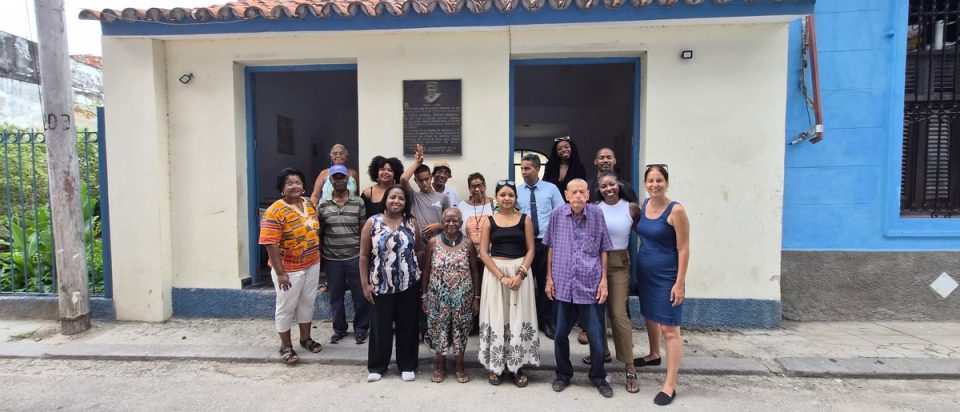
Rosemari Mealy: Right now, solidarity travel is more important than ever. You can still organize and go to Cuba, despite the energy crisis. You can join an existing group, or create your own delegation like I’ve done in partnership with AltruVistas. Things may be a bit more limited, but you can still have a Cuba experience, especially in Havana and the surrounding provinces, even though this is a difficult period in time because you are 100% going to see the impact of the blockade. I’ve lived in Cuba and have had the experiences Cubans were having: blackouts, flushing toilets with river water, cleaning up fallen tree limbs after hurricanes to help create a thoroughfare for cars—though I’m aware it’s my privilege to leave. When I was there in January 2026, we took some solar lamps, and gave some to the neighbors. You know, in Spanish, they always say, no es facil. It's not easy. It is not easy, but they are finding creative ways.
Now's the time that academics should be going to Cuba. They can really play a key role as conveyors of truth, and they have the option to travel under the Education category, as well as the Support for the Cuban People category. Link up with the University of Havana. Do a study abroad program. Set something up with Malia, who has nearly 30 years of Cuba experience. Medical professionals, trade unionists, artists, writers, religious communities, and anyone who wants to know more about Cuba can travel as Support for the Cuban People.
If you can’t go to Cuba yourself, some good organizations to connect with where you can make a tangible impact are the Hatuey Project (opens in a new tab), which focuses on getting medicine to children in Cuba, and Global Health Partners (opens in a new tab), which is addressing Cuba’s rising infant mortality rate—because the U.S. blockade is increasingly affecting health care access as well. There’s also the aforementioned IFCO; even though their most recent campaign has ended, they’re always doing campaigns (opens in a new tab).
AltruVistas: Anything else U.S. readers should be aware of regarding current events in Cuba?
Cuba has just come out with a new economic plan structure. They're instituting new reforms that are really going to be important: there are going to be more cooperatives and more private enterprises. Some people on the Left are upset about it, saying it’s a reversion back to capitalism or that it’s not how socialism should be, but Cubans are trying to find a way to survive at this moment. They’re trying to find balance amidst the economic strangulation of the blockade. You can learn more at https://www.telesurenglish.net/new-state-institute-cuba-restructuring (opens in a new tab). I also recommend reading information directly from the Cuban foreign Ministry, MINREX (opens in a new tab) .
AltruVistas: Rosemari, thank you so much for sharing your perspective and decades of lived experience with us. I know I’ve learned a lot!
Rosemari Mealy: Thank you; it’s been a pleasure.
About Dr. Rosemari Mealy
Rosemari Mealy, JD, PhD, is an activist-educator who has taught at numerous colleges and universities, including the City University of New York (CUNY), Florida international University (FIU), and as an invited lecturer in the Universidad de La Habana’s Facultad Preparatoria de Idiomas. A longtime friend of Cuba, Mealy also lived and worked in that country as an internationalist and journalist at Radio Havana Cuba. In 2013, she was conferred The Friendship Medal by the Council of State of the Republic of Cuba. The medal is presented to foreigners and organizations for their solidarity with the Cuban Revolution who have “Contributed to peace and the progress of humankind.” She is also a recipient, along with other solidarity activists, of the recent Cuban Institute of Friendship with the Peoples (ICAP) 65th Anniversary Medal.
Dr. Mealy has served as a board member of IFCO-Pastors for Peace; on the advisory board of “While We are Still Here;” and is a member of the National Conference of Black Lawyers (NCBL). She has been acknowledged for her long history of engaged community activism and contributions to artistic innovation, education, scholarly endeavors, and international human rights struggles. Her participation in international forums with non-governmental organizations (NGOs), has garnered global recognition and respect for her advocacy in defense of US political prisoners, gender equality, and the illegal imposition of US economic and political sanction against sovereign nations, including Cuba.
Rosemari has authored several books and contributed to numerous publications, including Fidel and Malcolm X—Memories of A Meeting (Black Classic Press, 2014), Activism and Disciplinary Suspensions/ Expulsions at Historically Black Colleges and Universities (HBCUs): A Phenomenological Study of the Black Student Sit-In Movement, 1960-1962, (Mellen Press, 2013), “Black Liberation,” in Engage Indigenous, Black, and Afro-Indigenous Futures (J. James, editor, Pluto Press, 2025), and “An Incomprehensible Omission: Women and El-Hajj Malik El-Shabazz,” in A Lie of Reinvention: Correcting Manning Marable’s Malcolm X, (J Ball and T. Burroughs, editors, Black Classic Press, 2013).